Wondering whether Lihue feels like a true hometown or just the place you pass through on the way to somewhere else? If you are thinking about living on Kauai full time, that question matters more than any postcard view. The good news is that Lihue offers a daily rhythm that is practical, connected, and distinctly local, and this guide will help you picture what full-time life there feels like today. Let’s dive in.
Lihue Works Like Kauai’s Hub
Lihue is not just one more town on the island. County planning identifies it as Kauai’s administrative, business, and transportation center, which helps explain why so many daily needs are concentrated here.
That practical role shapes everyday life in a real way. Instead of needing to treat errands, appointments, and travel as all-day projects, you often have key services relatively close together. For many full-time residents, that convenience is a big part of Lihue’s appeal.
The numbers also support the idea that Lihue is a settled year-round community. The 2020 Census counted 8,004 residents and 2,652 households, with 88.2% of residents living in the same house one year earlier. That suggests a place where many people are building routine, stability, and long-term roots.
Daily Life Feels Convenient
One of the clearest advantages of living in Lihue is how much of your weekly routine can happen nearby. Shopping, medical care, county services, transportation, and business activity all overlap here in a way that is hard to ignore.
Kukui Grove Center anchors a lot of routine errands. Its official information highlights national retailers, specialty stores, local products, plus grocery and pharmacy options. In practical terms, that makes it a central stop for everyday needs rather than a one-purpose shopping center.
County services are also concentrated in Lihue. The Public Information Office is at the Lihue Civic Center on Rice Street, and the Department of Finance lists an address at the Mo‘ikeha Building on the same campus. If you value having government services in town, Lihue stands out.
Medical access is another major part of the picture. Wilcox Medical Center is Kauai’s largest medical center, with 30 specialties, an emergency department, and urgent care. For full-time residents, that level of access adds real peace of mind to daily life.
Getting Around Is Straightforward
Lihue has a practical, connected feel because it serves as the island’s transportation center. Most daily movement is still car-based, but you also have public transit options that can support work, errands, and island travel.
The county bus system includes Route 70 Lihue, along with routes to Koloa, Kekaha, Hanalei, Wailua, Waimea, and Anahola. Practical stops include the Civic Center, Kukui Grove, Hokulei Village, and Kuhio Medical Center. The buses are lift-equipped, have bike racks, and the county notes there is no Sunday service.
Commute times in Lihue are relatively modest by broader standards. The Census reports a mean commute of 16.8 minutes. That helps explain why life here can feel efficient, especially if you work in or around the island’s service, government, retail, or transportation networks.
Lihue Airport also plays a huge role in the town’s identity. It is Kauai’s primary airport for both overseas and interisland flights, while Nawiliwili Small Boat Harbor sits about two miles southwest of town with berths, a landing pier, and a launch ramp. Together, those features make Lihue feel active and connected rather than tucked away.
The Lifestyle Is Coastal, But Not Sleepy
If you picture full-time life in Lihue as all infrastructure and errands, that would miss half the story. The town still gives you access to beach time, outdoor recreation, and the kind of coastal setting people hope for when they move to Kauai.
Kalapaki Beach is one of the area’s popular attractions, and county parks identify Nawiliwili Park and Niumalu Park as beach parks in the Lihue area. That means your day can include very ordinary tasks and still leave room for ocean views, shoreline walks, or time outside.
For longer recreation, Ke Ala Hele Makālae begins nearby at Lydgate Beach Park. The county describes it as an 8-mile paved coastal route for walking, jogging, biking, and skating. For many residents, access to places like this helps balance the workday feel of Lihue with the outdoor lifestyle that draws people to Kauai in the first place.
This is one reason Lihue feels different from a resort-only area. It has beaches and recreation, but it also has a normal weekday rhythm. You get a coastal setting with the functionality of an island hub.
Lihue Feels Lived In Year Round
For buyers considering a move, one of the most useful things to understand is that Lihue has a real residential pulse. County information notes that Lihue and Kapaa are the two busiest and most populated areas on Kauai, and the Lihue district includes places like Puhi, Nawiliwili, Hanamaulu, and Wailua.
That matters because it frames expectations. Full-time life here is not built around visitor activity alone. It is shaped by residents commuting, shopping, attending appointments, using parks, and moving through regular routines week after week.
The age mix also points to a broad, established community. Census data shows 23.3% of residents are under 18 and 30.0% are age 65 or older. That range suggests Lihue serves people in many stages of life, from working households to long-term retirees.
Housing Has More Than One Feel
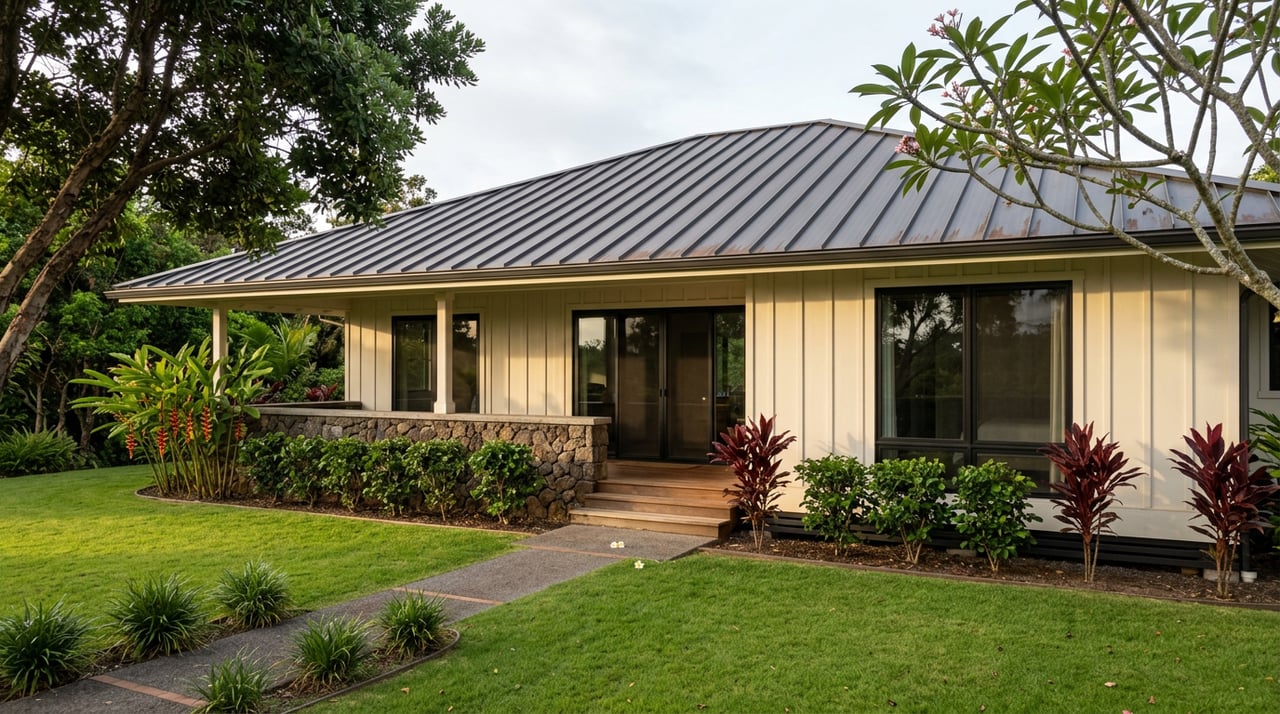
Lihue is not a one-note housing market. County planning materials describe apartments in and near the urban core, while areas like Puhi are associated with more suburban housing and newer retail development.
That creates a noticeable shift in housing character depending on where you look. In and near the older core, the feel can be more established and in-town. Outside that core, pockets tied to places like Hokulei Village and Puhi Subdivision Park suggest more subdivision-style living.
For buyers, that range can be helpful. You may be able to choose between a more central, practical location and an area that feels a bit more removed from the town center while still staying connected to Lihue’s services.
What the Numbers Say About Ownership
If you are trying to gauge whether Lihue is mainly a rental market or a place where people put down roots, the housing data gives useful context. The Census reports a 63.8% owner-occupied rate, which points to a meaningful base of full-time ownership.
The same snapshot lists the median value of owner-occupied homes at $878,500. Median monthly owner costs with a mortgage are reported at $3,111, while median gross rent is $1,956. Taken together, those numbers suggest demand on both the ownership and rental sides of the market.
For a buyer, that means Lihue is not best understood as a resort-only housing stock. It functions as a working residential market where people own, rent, commute, and stay put. That can be an important distinction if you are looking for long-term livability.
Who Lihue Fits Best
Lihue tends to fit buyers who care about function as much as scenery. If you want quick access to shopping, healthcare, county offices, and the airport, it can be one of the most practical places to live on Kauai.
It may also appeal to people who want a more connected daily routine. Because errands and services are clustered, life can feel more efficient here than in locations that require longer drives for basic needs.
At the same time, Lihue may not be the right fit if your main goal is a quieter, more removed residential setting. As one of Kauai’s busiest areas, it comes with the energy of an island center. For many residents, that tradeoff is exactly the point.
What Full-Time Life In Lihue Feels Like Today
So what does full-time life in Lihue actually feel like right now? It feels convenient, established, and grounded in real daily use. You are living in a place where county services, healthcare, retail, transportation, and recreation all intersect.
It also feels more local than many people expect. The resident stability, broad age mix, and owner-occupied share all point to a town with long-term households and everyday routines. Lihue is coastal, but it is also productive and practical.
If that combination sounds right for your move, buying strategy matters. The right fit in Lihue can depend on whether you want in-town convenience, a nearby subdivision-style pocket, or a property that balances access with privacy. If you want help evaluating where you fit best in Lihue or anywhere on Kauai, call or text anytime to discuss your goals with Michael Ambrose.
FAQs
What is daily life in Lihue like for full-time residents?
- Daily life in Lihue feels practical and connected, with shopping, county services, medical care, transit access, and recreation all woven into a compact area.
Is Lihue a good place on Kauai for year-round living?
- Lihue has many signs of a stable year-round community, including 8,004 residents in the 2020 Census, a 63.8% owner-occupied rate, and 88.2% of residents living in the same home one year earlier.
What makes Lihue different from other parts of Kauai?
- Lihue stands out as Kauai’s administrative, business, and transportation center, with the airport, harbor, county offices, retail, and major medical care all concentrated nearby.
What are shopping and services like in Lihue, Kauai?
- Lihue offers routine convenience through places like Kukui Grove Center, the Lihue Civic Center campus, the Mo‘ikeha Building, Wilcox Medical Center, and the Kauai Resource Center.
Is Lihue easy to get around without driving everywhere?
- Most travel is still car-based, but the county bus system connects Lihue to several parts of the island and includes practical stops at major service and shopping locations, though there is no Sunday service.
What is the housing mix like in Lihue for buyers?
- Housing in Lihue appears to range from more established in-town options near the core to more subdivision-style pockets in areas such as Puhi, giving buyers more than one type of setting to consider.
Are there beaches and outdoor activities near Lihue?
- Yes, the area includes access to Kalapaki Beach, Nawiliwili Park, Niumalu Park, and the nearby Ke Ala Hele Makālae coastal path for walking, jogging, biking, and skating.