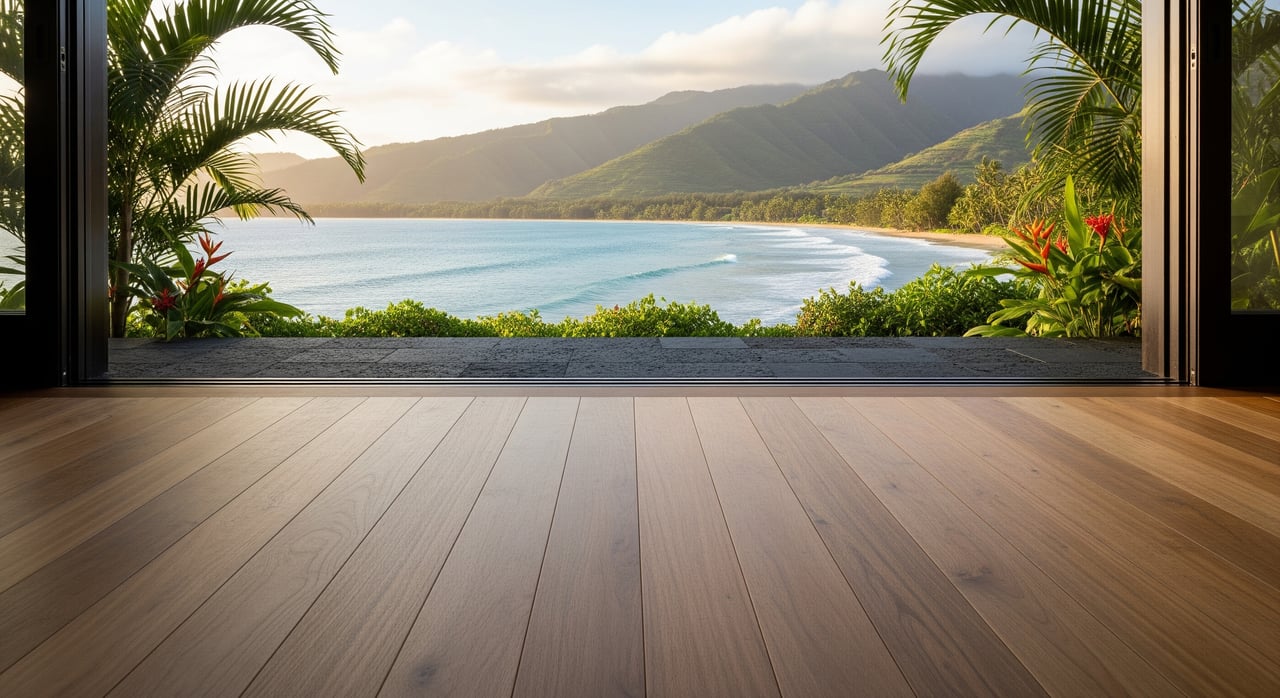
Your lanai takes the brunt of Hanalei’s rain, sun, and salt. Choose the wrong flooring and you will battle slick surfaces, swelling boards, and nonstop cleaning. Choose the right one and you will enjoy a cool, safe, and beautiful space year-round. In this guide, you will learn which materials perform best in Hanalei, how to match them to your lanai type, key installation details that prevent problems, and what helps most with long-term maintenance and resale. Let’s dive in.
What Hanalei’s climate demands
Hanalei’s tropical coastal setting brings high humidity, frequent heavy rain, strong trade winds, and intense UV. Salt spray accelerates corrosion and can stain porous surfaces. Materials must resist moisture, UV, mold, and mildew while staying safe underfoot when wet.
If your property is near the ocean or in a mapped flood zone, plan for coastal standards and flood-aware details. Thresholds, drains, and materials should handle wind-driven rain and occasional standing water. For any modification, consult the County of Kauai Building Division for current permits and code requirements.
Fasteners and metal components need to stand up to salt air. Stainless steel or similar corrosion-resistant hardware reduces rust stains and premature failure. Finally, prioritize slip resistance, easy cleaning, and proven UV stability.
Top lanai flooring options
Porcelain tile
Exterior-rated porcelain tile is a top pick for Hanalei. It is highly water resistant, UV stable, and available in textured, slip‑resistant finishes. When installed to exterior standards, it works on covered and many exposed lanais.
- Pros: Low absorption, durable color and finish, wide style options, easy to clean.
- Cons: Grout can collect dirt and mildew without proper products and cleaning. Movement in the substrate can crack tile if installation is not to exterior standards.
- Best practices: Choose outdoor-rated porcelain with a certified wet slip-resistant surface. Use polymer-modified thinset and epoxy or polymer grout. Include uncoupling or crack-isolation membranes and movement joints per industry guidance.
Natural stone
Dense stone like granite or basalt can perform well in coastal conditions and offers a classic look. Textured finishes improve traction when wet.
- Pros: Attractive and durable when you choose dense, low-absorption stone.
- Cons: Porous stones such as travertine and sandstone need penetrating sealers and more frequent care. Salts can trigger efflorescence or stains. Slip resistance varies by finish.
- Best practices: Select dense, low-absorption stone for exposed areas. Use penetrating sealers and plan on periodic resealing and cleaning.
Concrete
Concrete is a practical, long-lasting surface for large lanais. It can be finished in many ways to improve slip resistance and appearance.
- Pros: Durable, cost-effective for larger areas, easy to texture for traction.
- Cons: Hairline cracking is possible without proper reinforcement and joints. Smooth or polished finishes can become slippery when wet. Topical colors may fade and need resealing.
- Best practices: Provide slope and drainage with control joints. Choose textured finishes like broomed or exposed aggregate. Use breathable sealers that allow moisture vapor to escape.
Tropical hardwoods
Teak, ipe, and similar dense hardwoods bring a warm, traditional lanai feel. In Hanalei’s climate, they require consistent care.
- Pros: Naturally resistant to rot and insects, rich appearance.
- Cons: Color will silver without routine oiling. Boards can be slippery when wet. Wood can cup or move in high humidity. Fasteners can corrode if not stainless.
- Best practices: Use certified, fully seasoned material with stainless or silicon bronze fasteners. Provide slope and airflow. Plan on regular oiling and cleaning, especially on covered lanais where wood is most appropriate.
Composite decking
High-quality capped composites and PVC decking offer low-maintenance performance with coastal resilience.
- Pros: Resistant to rot, insects, and moisture. Many products are UV stable and salt tolerant, with textured surfaces for traction.
- Cons: Surface heat can build in direct sun. Quality varies by brand, and some products can stain or lighten over time.
- Best practices: Select composite products warranted for coastal exposure. Use stainless fasteners and follow ventilation and framing guidelines to avoid trapped moisture.
Outdoor-rated LVP and resilient floors
Some resilient products are designed for covered outdoor areas, but most standard LVP is not suited to Hanalei’s wet, salty exposure.
- Pros: Comfortable underfoot, appealing for semi-exterior living spaces.
- Cons: Moisture and UV can degrade products not specifically rated for exterior conditions. Adhesives may fail in unconditioned, damp areas.
- Best practices: Use only products explicitly rated for exterior or semi-exterior use, and limit to fully covered lanais with excellent ventilation.
Interlocking pavers and modular systems
Interlocking porcelain pavers on pedestals and rubber or porous systems can solve drainage and access needs.
- Pros: Elevated paver systems improve drainage and allow access to membranes and utilities. Rubber tiles add traction and comfort.
- Cons: Higher upfront cost and specialized installation. Pedestal systems require experienced installers and careful detailing.
- Best practices: Ensure proper waterproofing beneath, wind-uplift resistance at edges, and clear drainage paths.
Match material to your lanai
Covered lanais
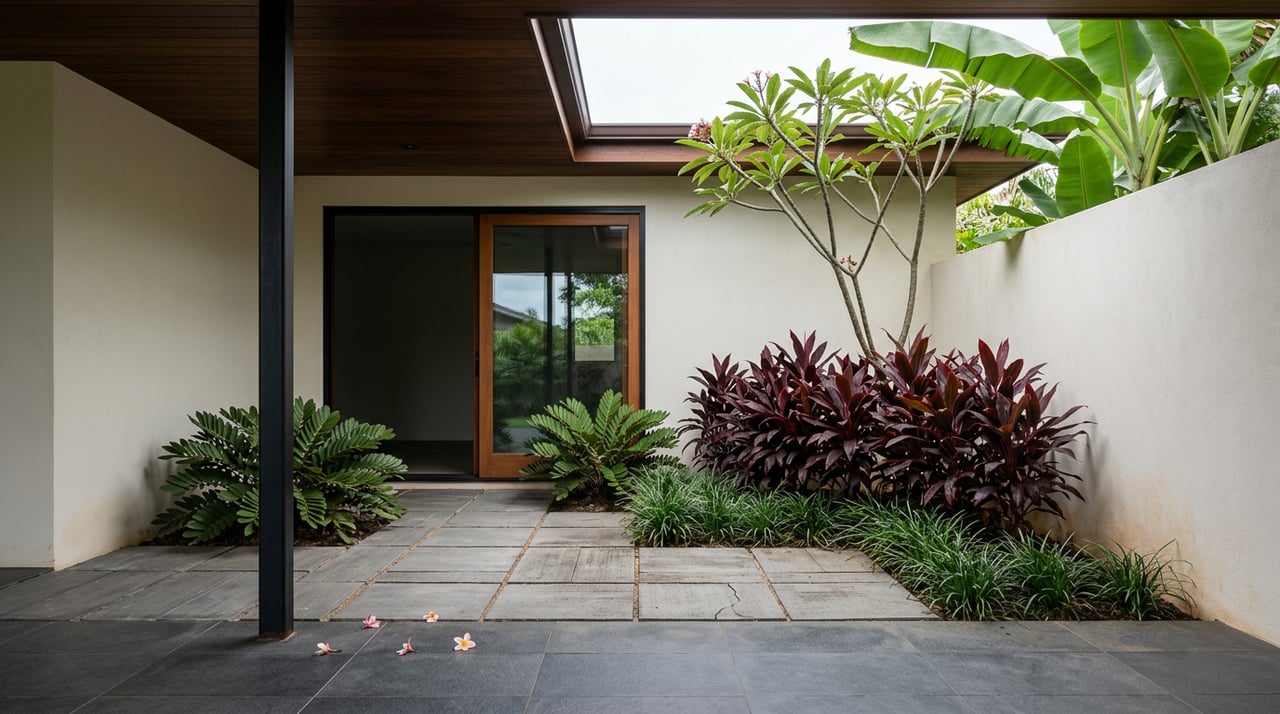
For shaded, covered spaces with minimal direct rain, porcelain tile shines for easy care and design flexibility. Tropical hardwoods can work if you accept regular maintenance. Some outdoor-rated resilient products may be an option in fully covered, well-ventilated areas.
Exposed or ocean-facing lanais
Prioritize non-porous, UV-stable materials. Exterior porcelain tile, dense natural stone such as granite or basalt, textured concrete, or high-grade composite decking handle Hanalei’s salt, sun, and rain best.
Elevated lanais and waterproofed decks
Consider interlocking porcelain pavers on pedestals or composite decking over a waterproof membrane. These systems promote drainage, simplify maintenance, and allow easier replacement of individual pieces if needed.
Installation must-haves in Hanalei
- Drainage and slope: Aim for positive drainage away from doors and walls. Typical exterior guidance is about 1/8 inch to 1/4 inch per foot toward drains or scuppers.
- Substrate and waterproofing: Use exterior-rated waterproofing or crack isolation membranes where appropriate, and tie them into flashing, thresholds, and drains to keep water out of the building envelope.
- Adhesives, grout, and fasteners: Choose products formulated for exterior coastal use. Polymer-modified thinsets, epoxy or polymer grout, and stainless or similarly corrosion-resistant fasteners reduce failure and staining.
- Movement joints: Include movement joints at transitions and per industry standards to manage thermal expansion and substrate changes.
- Slip resistance: Specify surfaces with verified wet slip resistance. Avoid overly smooth finishes.
- UV and thermal expansion: Select finishes with proven UV stability and account for expansion and contraction in both materials and adhesives.
- Biological control: Design for easy cleaning and fast drying. Keep drains clear and avoid details that trap leaf litter or water.
- Wind and uplift: On ocean-facing lanais, confirm anchorage and edge details for wind uplift.
- Permits and flood zones: Check Kauai County requirements, especially in coastal Special Management Areas or mapped flood zones, and follow any flood-resistant construction details that apply.
Maintenance and longevity
- Porcelain tile: Long lifespan when installed correctly. Clean routinely, use appropriate grout cleaners, and inspect movement joints and sealants.
- Natural stone: Durable, but porous stones need periodic resealing and cleaning to control biological growth and reduce salt-related staining.
- Concrete: Can last decades. Expect occasional crack repairs and resealing for decorative finishes.
- Tropical hardwoods: Often achieve 10 to 20 or more years with consistent oiling and upkeep. Expect color changes in sun and salt air.
- Composite decking: Generally low maintenance with many products performing 15 years or more depending on quality and exposure.
Routine care goes a long way in Hanalei. Sweep and rinse often to remove salt and debris. Clean with manufacturer-recommended products, and avoid harsh abrasives that can reduce texture. Inspect fasteners, grout, seals, and edges after storms.
Hiring the right installer
Ask targeted questions so you know your lanai will perform in coastal conditions.
- Have you completed exterior flooring projects in Hanalei or similar coastal environments, and can you share local references?
- Which tile, grout, adhesive, sealers, fasteners, or decking systems do you specify for salt, UV, and humidity, and why?
- How will you handle slope, drainage, waterproofing, flashing, and movement joints?
- What warranties cover materials and workmanship in coastal exposure, and how are they maintained?
- Are you licensed in Kauai County and familiar with local permitting and inspections?
Choose installers with coastal experience, proper licensing and insurance, and a plan that addresses drainage, waterproofing, and wind exposure. Ask for written scopes and maintenance guidance that protect warranties.
Resale benefits
Durable, low-maintenance lanai surfaces appeal to Kauai buyers who value outdoor living. Materials that stay dry underfoot, resist mold, and hold color in the sun can improve first impressions and reduce buyer concerns about upkeep. Share the maintenance schedule and expected life of your lanai flooring in your listing to help buyers feel confident.
Ready to plan your lanai?
If you are renovating before selling or dialing in finishes for a new purchase, the right lanai flooring can boost day-to-day enjoyment and long-term value. Want a second opinion on what fits your exposure, lifestyle, and resale goals in Hanalei? Call or text Michael Ambrose to talk through your options and connect with trusted local installers.
FAQs
In Hanalei, what lanai flooring requires the least maintenance?
- High-quality exterior porcelain tile or premium composite decking typically needs the least routine care while resisting moisture, UV, and salt when properly specified and installed.
Can I use hardwood for a Hanalei lanai?
- Yes, but choose dense tropical species like teak or ipe, use stainless fasteners, and plan for regular oiling and cleaning. Wood is best for covered lanais where you accept higher upkeep.
Do exterior tile lanais need a waterproof membrane in Hanalei?
- In many assemblies, especially over wood framing or where water could infiltrate, a waterproofing or crack isolation membrane is recommended. Follow industry guidance and local code.
How important is slip resistance on a Hanalei lanai?
- Critical. Lanais often get wet from rain and rinsing, so select surfaces with verified wet slip resistance and avoid overly smooth finishes.
Will salt air harm stone and metal on a lanai?
- Salt accelerates corrosion on metals and can cause staining or efflorescence on porous stone. Use corrosion-resistant metals, seal porous stone, and rinse surfaces regularly.
What slope should a lanai floor have for drainage in Hanalei?
- Exterior guidance typically calls for positive drainage in the range of about 1/8 inch to 1/4 inch per foot toward drains or scuppers to move water away from the home.