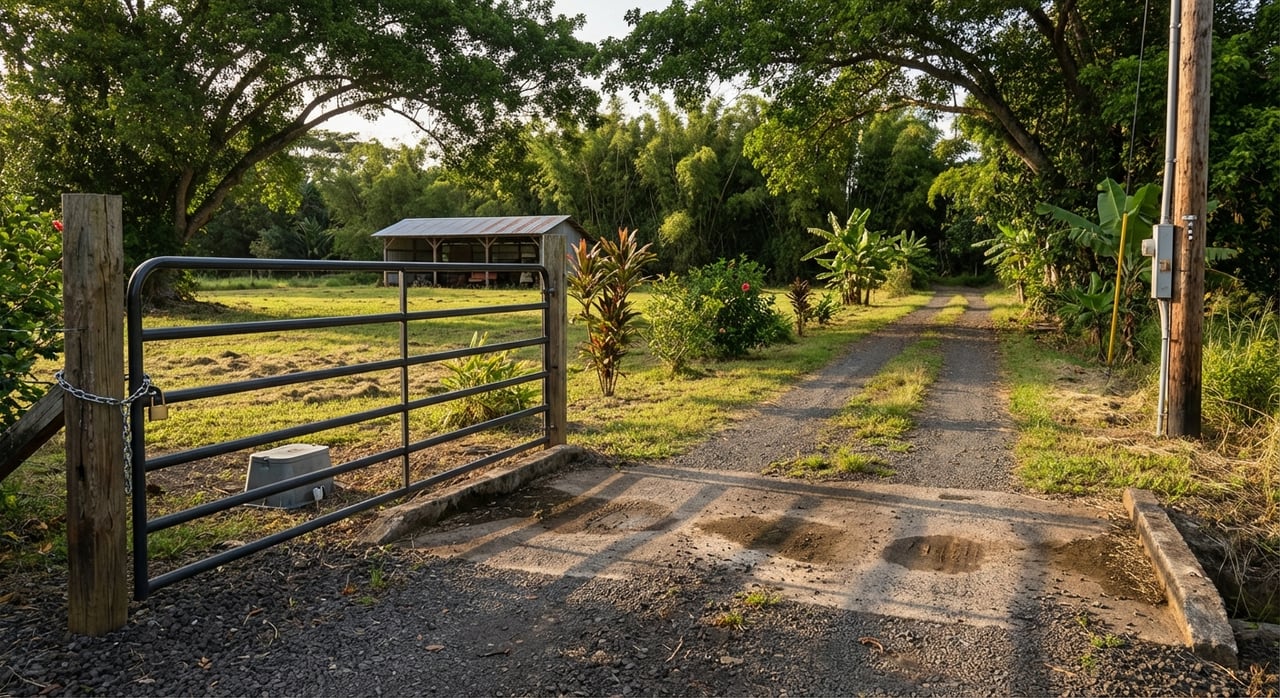
Thinking about a small farm or estate in Kīlauea? Agricultural land can be a great fit, but the rules for water, wastewater, and “farm dwellings” are different from standard residential lots. With the right plan, you can avoid costly surprises and move forward with confidence. This guide gives you the key basics, timelines, and a practical checklist tailored to Kīlauea on Kaua‘i’s North Shore. Let’s dive in.
What “ag land” means in Kīlauea
Agricultural zoning in Hawai‘i has both State and County layers. Under State law, permitted uses in the Agricultural district include cultivation, livestock, and farm dwellings that are tied to active agricultural use. You will want to confirm the State Land Use district and how Kaua‘i County applies it on a specific parcel. Review the State framework for farm dwellings in HRS §205‑4.5.
Kaua‘i County’s zoning code authorizes farm dwellings and separate guest houses in the Agriculture district, but building permits depend on written confirmations for water, wastewater, and fire protection. That means you cannot assume you can convert an outbuilding to a legal dwelling without clearances. See the County standards and guest‑house process in the Comprehensive Zoning Ordinance.
Farm dwellings and guest houses
Farm dwelling basics
A farm dwelling is a single‑family home that is accessory to active agriculture under State law. Counties and the State expect documentation that agriculture is occurring to qualify as a farm dwelling. Plan to keep records that show ongoing agricultural activity. Learn how farm dwellings are defined in HRS §205‑4.5.
Guest house rules on Kaua‘i
Kaua‘i allows guest houses in Ag zoning with clear limits. A guest house can be up to 800 square feet, may include a kitchen, and cannot be used as a transient vacation rental. Before a building permit, the County requires a Guest House Clearance Form and written confirmations from the Department of Water, the Department of Health for private wastewater systems, and the Fire Department. Review the guest house provisions and clearance requirements in the CZO.
Water first, then wastewater
Public water checks
Start with water availability. In some Kīlauea pockets, public water is limited or served by smaller systems. Always confirm meter status, meter size, and whether the County Department of Water has capacity for any added dwelling. Written DOW confirmation is required for guest‑house clearances. The County has issued water capacity and conservation notices during stressed periods, so plan ahead and verify conditions through the County’s public updates and with DOW directly.
Private wells 101
If public water is not available, a private well can be an option. Drilling requires a State well construction and pump installation permit from the Commission on Water Resource Management. CWRM coordinates location review and processes complete applications, and certain high‑capacity uses may need a separate Water Use Permit. Find permit guidance and forms on the CWRM site.
For planning, industry guides show typical domestic wells in Hawai‘i often cost about 15,000 to 40,000 dollars depending on depth, geology, and access, and permitting and drilling can take multiple months. See a practical overview in this Hawai‘i well owner guide. Get two to three written bids from licensed Hawai‘i well drillers and start the permit process early.
Wastewater systems
If the lot is not on sewer, you will need an individual wastewater system. The Hawai‘i Department of Health regulates these systems, requires soils or percolation testing, and reviews engineered designs where needed. Cesspools are being phased out, so plan for upgrades on older parcels. Review requirements and resources on the DOH Wastewater Branch page.
Power, access, and site constraints
Electricity and communications
Kaua‘i Island Utility Cooperative provides electrical service on the island. New service requires applications and fees, and rural parcels may need line extensions, transformers, or service upgrades that add time and cost. Apply early and request a written estimate so you can budget for construction. Start here with KIUC’s service process.
Legal access and surveys
Confirm recorded, legal access to the parcel. Public road frontage, private roads, common driveways, and easements each carry different obligations and may affect permitting. An ALTA or boundary survey and a title review will verify access rights and any road maintenance agreements. Kaua‘i’s zoning code also defines access types and private streets, which can shape what improvements you may need. See the County’s access standards in the CZO.
Flood, shoreline, and SMA limits
North Shore parcels can sit in flood zones, coastal hazard areas, or the County Special Management Area. These layers can add permits and limit placement of structures, including guest houses in some SMA locations. During due diligence, check FEMA flood maps, County tsunami evacuation zones, and SMA boundaries using the State’s hazard map layers.
Soils, slope, and microclimate
Kīlauea’s soils and slope vary over short distances, which affects both crop success and wastewater design. Some upland areas include deep, well‑drained series such as Makapili, while other pockets are heavier clays. A soil scientist or engineer can help with siting and septic feasibility. For soil context, review the NRCS profile for the Makapili series.
Due diligence checklist
Use this short list to protect your timeline and budget:
- Verify the parcel’s State Land Use district and County zoning. Confirm what is allowed and whether any code changes are pending. Start with the State’s farm dwelling rules in HRS §205‑4.5.
- Order a title report and review all recorded documents. Look for easements, CCRs, HOAs, or agricultural leases that may be stricter than zoning.
- Confirm water. Ask the County DOW for a written water availability or capacity letter, which the County requires for guest‑house clearance. See the County clearance requirement in the CZO.
- Confirm wastewater. If sewer is not available, schedule soils and perc testing, and engage a wastewater engineer. Review DOH rules and resources on onsite systems.
- Request a KIUC service availability review. Ask for estimates on line extensions and meter sizing. Start forms early via KIUC.
- Get an ALTA or boundary survey. Verify recorded access, address assignment, and any private road agreements. County definitions are in the CZO.
- Check hazard layers and SMA status. Review FEMA flood maps, tsunami evacuation zones, and SMA boundaries using the State hazard layers.
- If considering a well, consult a licensed driller and begin the CWRM permit process using the CWRM forms. Use written bids and include pump testing and water quality steps in your schedule.
- If you plan to pursue agricultural tax dedication, study eligibility, documentation, and rollback rules. A recent decision offers context on how the County interprets qualifying uses. Read the case summary here.
- Build time into your contract. Include contingencies for zoning and utility letters, perc results, surveys, title review, and permitting if you intend to build.
Timelines and budget ranges
Every site is different, but these planning ranges help set expectations:
- Escrow due diligence window: often 30 to 60 days, depending on negotiations and the checks you need to complete.
- Water via private well: allow about 2 to 4 months from permit application through drilling and testing. Find permit steps on CWRM’s site and plan for typical domestic well costs in the 15,000 to 40,000 dollar range based on the Hawai‘i well guide.
- Wastewater: a few weeks to several months for soils testing, design, and DOH approvals. If converting from a cesspool, add time and budget. See DOH’s onsite system guidance.
- Guest house and building permits: expect 2 to 6 months for a straightforward small dwelling after completing the required water, wastewater, and fire clearances. Review the County clearance requirement in the CZO.
- Electricity: KIUC new‑service paperwork is simple, but physical line extensions or transformers can add weeks to months. Start early with KIUC.
What ag use looks like here
- Small diversified farm. Orchard rows, a market garden, and bees can thrive with reliable water, practical access, good soil, and an approved wastewater plan. Soil series like Makapili give clues about drainage and depth. Check the NRCS soil profile for context.
- Equestrian or gentleman estate. Feasible under Ag zoning with the right infrastructure. Be mindful of limits on farm dwellings and guest houses, and keep records of agricultural activity if you plan to qualify a farm dwelling. See guest‑house size and use limits in the CZO.
Smart moves for Kīlauea buyers
Treat utilities and access as your first filters, not an afterthought. Get written confirmations for water and wastewater early, and line up KIUC estimates before you commit to timelines. Use a survey and title review to surface any access or easement issues, then check flood and SMA layers to protect your building plan. A clear, documented approach will save you money and time while keeping your project on track.
Ready to talk through a specific parcel or build a due diligence plan that fits your goals? Reach out to Michael Ambrose for local guidance and a hands‑on process from offer to closing.
FAQs
What is a farm dwelling in Hawai‘i?
- A farm dwelling is a single‑family home that is accessory to active agriculture under State law, and counties expect documentation of agricultural use to qualify; see HRS §205‑4.5.
Can you build a guest house on Kīlauea ag land?
- Yes, Kaua‘i allows guest houses up to 800 square feet in Ag zoning with clearances for water, wastewater, and fire protection, and they cannot be used as transient vacation rentals per the CZO.
How do you get water if there is no meter?
- You can pursue a private well with a State permit from CWRM or confirm capacity with the County DOW; see CWRM’s forms and County clearance notes in the CZO.
Are cesspools allowed on North Shore ag parcels?
- Cesspools are being phased out, and the DOH regulates individual wastewater systems with testing and approvals for new or upgraded systems; see the DOH Wastewater Branch.
What permits apply near the coast or in the SMA?
- Parcels in flood zones or the Special Management Area may face extra permits and limits on siting, including stricter guest‑house rules; check the State’s hazard map layers.
How does agricultural tax dedication work on Kaua‘i?
- The County’s Ag Dedication program can reduce property taxes for qualifying commercial agricultural uses, with documentation and possible rollback penalties; a recent case offers interpretation context here.