Trying to choose between an oceanfront home and an in-town Hanalei property? In a market this small and expensive, that decision is about much more than views. You are weighing lifestyle, access, insurance and hazard exposure, rental rules, and how you actually plan to use the property. If you want to buy in Hanalei with more clarity and fewer surprises, this guide will help you compare the tradeoffs. Let’s dive in.
Hanalei homes come with very different tradeoffs
Hanalei is a thin, luxury-leaning market where prices can vary widely by location and property type. Zillow estimated Hanalei’s average home value at $3.32 million as of March 31, 2026, while Redfin reported a January 2026 median sale price of $2.3 million and a long average time on market in its Hanalei data set.
That spread matters because “Hanalei” can mean very different buying experiences. On one end, beachfront homes on Weke Road have reached prices like 5050 Weke Road’s $32.25 million sale. On the other end, inland and in-town examples in the current data are still expensive, but generally lower than the top beachfront tier.
Oceanfront homes offer the strongest beach lifestyle
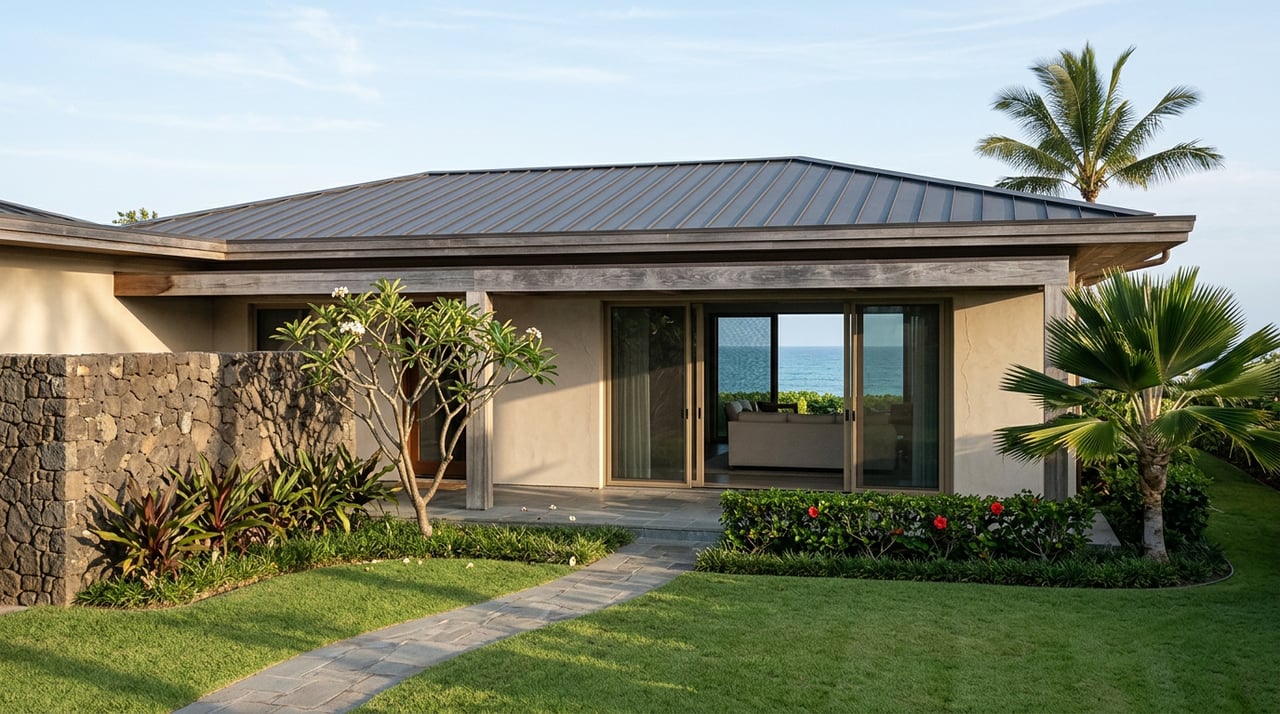
If your goal is the full Hanalei Bay experience, oceanfront usually delivers the most iconic setting. Buyers at this level are often paying for direct sand access, wide bay views, scarce frontage, and the long-term appeal of owning a true North Shore beach property.
Recent examples show what drives that premium. A Weke Road beachfront estate at 5302 Weke Road sits on more than an acre of beachfront land, while other homes near the beach have been marketed for their vacation-rental status and proximity to Hanalei Bay.
Why buyers pay more for oceanfront
Oceanfront buyers are usually prioritizing lifestyle first. You may want to walk straight to the sand, enjoy direct bay views, or hold a property that feels like a long-term family asset.
For some buyers, there is also an investment or legacy angle. In a market with limited supply, true beachfront ownership can carry prestige and long-term scarcity that is hard to replicate elsewhere in Hanalei.
Oceanfront risks are real
The tradeoff is that shoreline property requires deeper due diligence. Kauaʻi County’s floodplain management resources outline separate certification requirements for V-Zone and A/AE/AH flood areas, and the county’s shoreline process points owners toward formal setback review.
The State of Hawaiʻi also uses the 3.2-foot sea-level-rise scenario as its planning benchmark for most development. State guidance identifies passive flooding, annual high-wave flooding, and coastal erosion as separate hazards, and DLNR has noted that 70% of beaches on Kauaʻi, Oʻahu, and Maui are chronically eroding.
North Shore conditions can add another layer. Kauaʻi County has issued no-swimming advisories for north-facing shores including Hanalei Bay during hazardous surf, and flood events have affected travel near Hanalei Bridge and Kūhiō Highway.
When oceanfront makes the most sense
Oceanfront is often the better fit if you:
- Want the strongest beach lifestyle and direct sand access
- Value iconic views and true frontage scarcity
- Can handle more insurance, maintenance, and regulatory complexity
- Are comfortable doing extra review on flood exposure, shoreline issues, and access risk
In-town homes focus on convenience and daily use
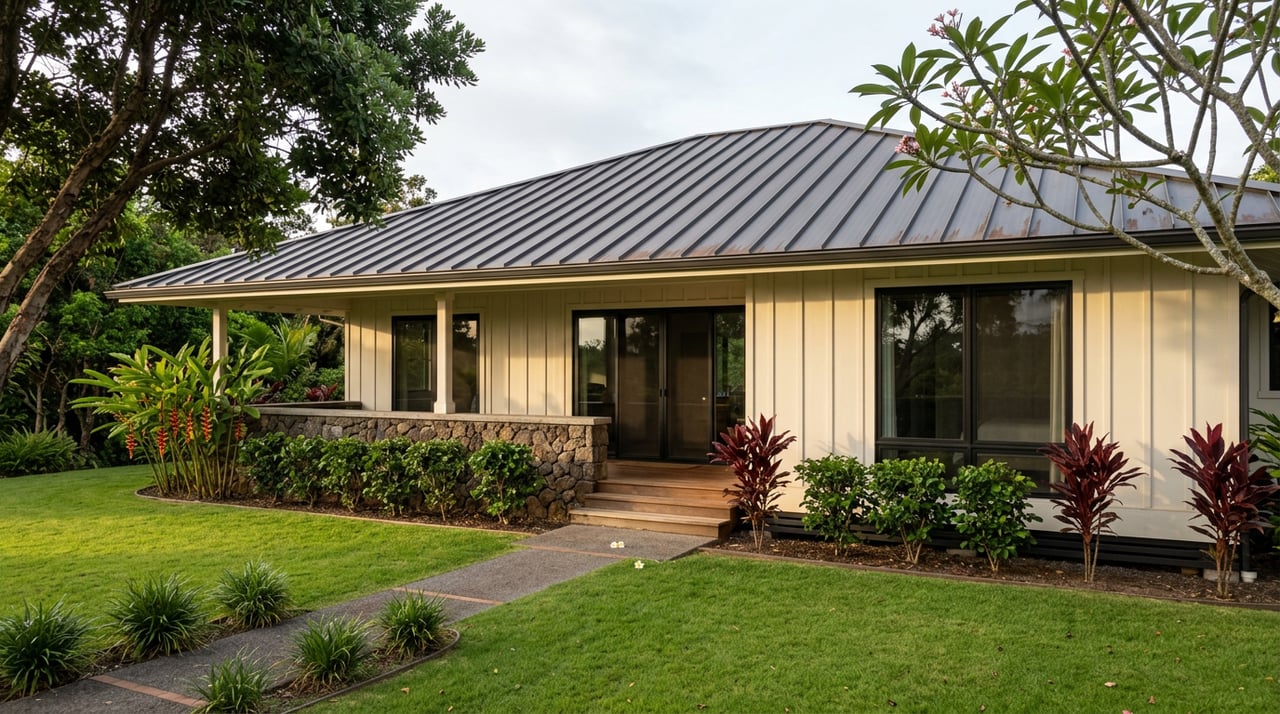
If you want Hanalei access without paying for the top beachfront premium, in-town homes deserve a close look. These properties often appeal to buyers who care about walkability, easier day-to-day living, and a more practical ownership experience.
Hanalei town is compact and amenity-rich. The Hanalei Town directory highlights local shops and boutiques, and nearby commercial areas such as Ching Young Village and Hanalei Center support a central, convenient lifestyle.
What in-town buyers usually gain
In-town homes often trade direct frontage for convenience. Depending on the parcel, you may be closer to shops, dining, and everyday errands while still having beach access nearby.
That can make a big difference if you plan to use the home regularly rather than as a trophy property. Many buyers find that being able to move around Hanalei easily adds a lot of value to daily life.
Price points are still premium
In-town and mauka-side homes are not cheap alternatives. Redfin’s current Hanalei-area examples included a Kuhio Highway home described as the market’s least expensive active listing at $2.73 million, a 5 Kuhio Highway estimate of $3.25 million, and 6581 Anahulu Road at an estimated $2.45 million.
So while in-town usually sits below the top beachfront tier, you are still buying into one of Kauai’s most expensive micro-markets.
Mauka-side homes can offer more privacy
Some buyers looking beyond beachfront and in-town inventory are drawn to mauka-side or valley-side settings. These properties can offer a more private, land-oriented feel, often with mountain or waterfall views rather than front-row beach frontage.
That can be appealing if being steps from the sand is not your top priority. The research examples include Wainiha Valley properties near Hanalei that were described around privacy, scenery, and rental potential rather than direct beachfront lifestyle.
Lower coastal exposure is not a guarantee
Mauka-side and inland properties may feel less exposed than beachfront parcels, but they still need parcel-level review. Kauaʻi County’s floodplain guidance remains relevant because Hanalei sits within a high-hazard coastal environment.
In other words, inland does not automatically mean simple. You still want to verify flood-zone status, access concerns during major weather events, and any site-specific county requirements.
Rental potential depends on the parcel
In Hanalei, rental potential is not something you should assume based on location alone. A great view or strong walkability does not automatically mean you can legally rent the home short term.
Kauaʻi County states that short-term rentals under 180 days are not allowed outside the Visitor Destination Area unless the property is a lawful nonconforming TVR or homestay. The county also publishes an approved homestay and nonconforming TVR list by TMK.
Why this matters for buyers
This makes rental value parcel-specific, not neighborhood-wide. One Hanalei-area home at 5086 Opelu Street was marketed as a permitted TVR vacation home near the beach, while another non-oceanfront area property in Wainiha was described as a legally permitted vacation rental with income potential.
So if income matters to you, the first question is not whether the home is oceanfront or in town. The first question is whether the specific parcel has lawful rental status and what transfer or renewal steps may apply.
What to verify before you offer
Before you write an offer on any Hanalei property, you should confirm:
- Whether the property is legally rentable for short-term stays
- Whether it is inside or outside the Visitor Destination Area
- Whether the parcel sits in a flood zone or coastal hazard area
- Whether shoreline setback review or SMA review may apply
- Whether storm events have affected access to the area
The county says a buyer of an existing TVR should receive the prior permit file and update the renewal application within 30 days of recordation. That detail alone shows how important property-specific diligence is.
Which Hanalei home type fits you best?
The best choice usually comes down to your budget, your risk tolerance, and your intended use. In Hanalei, those factors matter more than a simple “beachfront versus not” preference.
Here is a practical way to think about it.
Oceanfront may fit you if
- You want direct beach access and signature Hanalei Bay views
- You value scarcity and potential legacy appeal
- You can absorb higher carrying costs and more review on hazards and regulations
- You are comfortable with the realities of shoreline ownership
In-town may fit you if
- You want easier daily living and better access to shops and dining
- You prefer a balance of beach access and practicality
- You want premium Hanalei ownership without paying for the highest beachfront tier
- You expect to use the home often and value convenience
Mauka-side may fit you if
- You prefer privacy, greenery, and a more land-oriented setting
- You care more about views and breathing room than direct sand access
- You want to explore value below top beachfront pricing
- You still plan to complete full parcel-level due diligence
The smartest Hanalei move is careful comparison
In a market this limited, the right property is rarely just about what looks best in photos. It is about matching the home to how you want to live, what level of risk you can accept, and whether the parcel works for your long-term plans.
If you are comparing oceanfront, in-town, or mauka-side options in Hanalei, working with someone who understands Kauai’s micro-markets, rental rules, and transaction details can save you time and help you avoid costly assumptions. If you want help sorting through the tradeoffs and narrowing the right fit, connect with Michael Ambrose.
FAQs
What is the main difference between oceanfront and in-town homes in Hanalei?
- Oceanfront homes usually offer direct sand access, iconic views, and more scarcity, while in-town homes often offer easier daily use, walkability, and somewhat lower pricing than the top beachfront tier.
Are in-town Hanalei homes much cheaper than oceanfront homes?
- Usually they are less expensive than the highest-end beachfront properties, but current examples still show in-town and inland Hanalei homes commonly priced in the multi-million-dollar range.
Do oceanfront Hanalei homes have more risk?
- Yes, they often require deeper review for flood exposure, shoreline setback issues, sea-level-rise planning, erosion, insurance, and storm-related access concerns.
Can you use any Hanalei home as a short-term rental?
- No. Kauaʻi County says short-term rentals under 180 days are not allowed outside the Visitor Destination Area unless the property is a lawful nonconforming TVR or homestay.
What should buyers verify before making an offer on a Hanalei home?
- You should verify legal rental status, VDA location, flood-zone and hazard exposure, possible shoreline or SMA review, and any access concerns tied to major weather events or road closures.